During this Lunch & Learn, TMJology introduces how services such as TMJ and intraoral massage, full-body integrated manual therapy, neuromuscular therapy, self-guided programs, and provider mentorships can support and complement your existing practice.
I also understand how challenging it can be to coordinate a full team for a one-hour Lunch & Learn. To make this information more accessible, I’ve created a video overview that walks through the services I offer and how they may benefit your practice and patients.
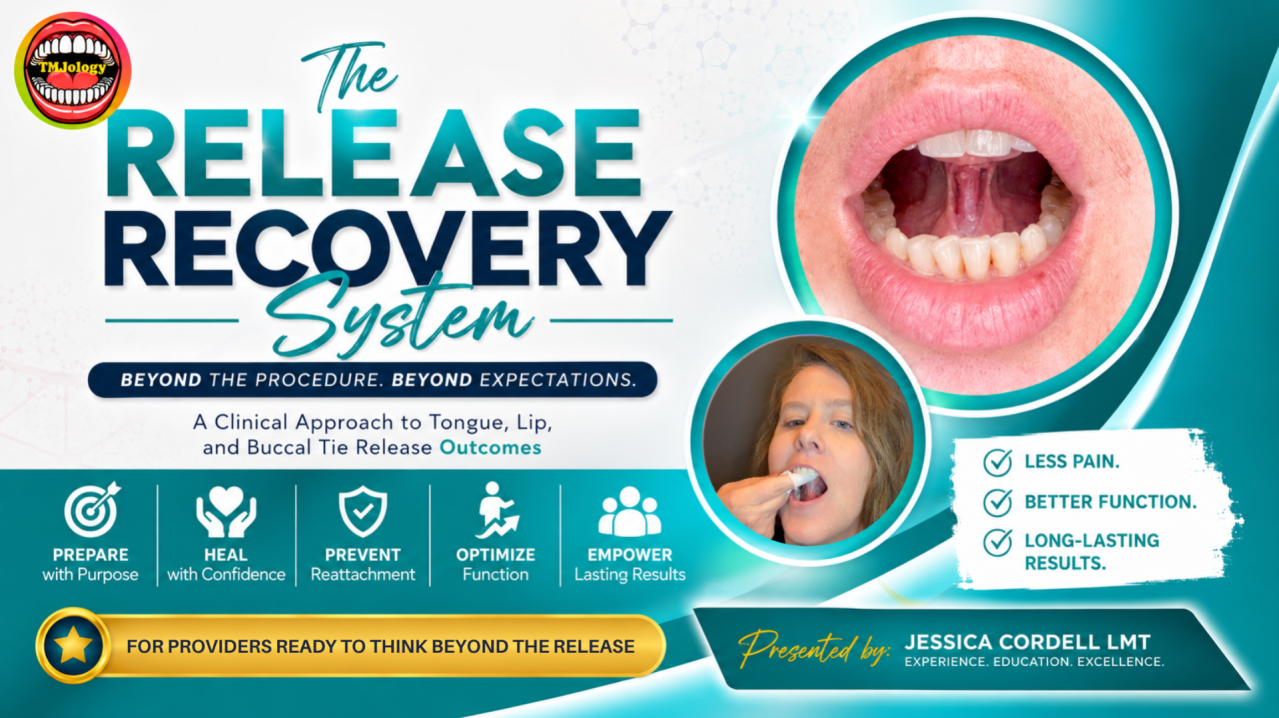
A clinically focused training designed to help providers improve frenectomy outcomes by addressing what happens before, during, and after the procedure. This program goes beyond basic protocols to teach how to recognize compensation patterns, support tissue response, and guide long-term functional integration.
Who This Is For:
• Frenectomy release providers
• Myofunctional therapists
• Manual therapists
• Providers supporting patients pre and post-frenectomy
What Participants Will Learn
Most providers are trained to perform or support a release. Far fewer are taught how to optimize the outcome that follows.
If you’ve ever had a case where:
• The procedure was completed, but progress stalled
• The patient followed instructions, but results weren’t consistent
• Reattachment or compensation patterns developed
The challenge is often not the release itself, but everything surrounding it.
What Makes This Different
This is not a course on stretches or protocols alone. This is a clinical system designed to help you understand:
• Why outcomes fall short
• How to identify issues early
• How to adjust your approach based on what the patient is showing you
You’ll learn how to:
Move beyond isolated treatment and begin thinking in terms of preparation, response, and long-term integration.
This section focuses on preparing the patient and surrounding system before a tongue, lip, or buccal tie release is performed. Topics include why releases often fail without proper preparation, unresolved compensation patterns, nervous system guarding, poor stability, and limited functional awareness. Providers will learn the role fascia and manual therapy play in tissue adaptability and nervous system regulation, how to identify patients who may not yet be ready for a release, pre-frenectomy stretches and functional preparation strategies, as well as post-operative supply recommendations and appropriate provider referral considerations to help support better long-term outcomes.
This section focuses on post-release follow-up care and what providers should assess during the early stages of healing. Topics include monitoring wound shape, tissue tension, signs of reattachment, daily healing progression, patient education, and key information patients should understand during recovery. Providers will also learn when additional provider referral or collaborative support may be appropriate to help optimize healing and long-term functional outcomes.
This section focuses on preparing the patient and surrounding system before a tongue, lip, or buccal tie release is performed. Topics include why releases often fail without proper preparation, unresolved compensation patterns, nervous system guarding, poor stability, and limited functional awareness. Providers will learn the role fascia and manual therapy play in tissue adaptability and nervous system regulation, how to identify patients who may not yet be ready for a release, pre-frenectomy stretches and functional preparation strategies, as well as post-operative supply recommendations and appropriate provider referral considerations to help support better long-term outcomes.
This section focuses on the continued healing process and how to assess progression throughout the mid-healing phase following a tongue, lip, or buccal tie release. Topics include proper stretch execution, distinguishing normal tissue tension from signs of reattachment, monitoring healing progression, and providing appropriate mid-healing support. Providers will also learn when additional provider referral or collaborative care may be beneficial to help support continued progress and functional integration.
This section focuses on understanding scar tissue development and helping patients navigate the later stages of healing following a tongue, lip, or buccal tie release. Topics include what patients should expect throughout the healing timeframe, how scar tissue can influence mobility and function, hands-on self-care strategies, and additional stretching approaches to support long-term tissue adaptability and functional integration.
This section focuses on hypermobility and EDS considerations in tongue, lip, and buccal tie recovery, and why these patients often require a more individualized approach. Topics include common hypermobility and EDS symptoms, tissue fragility and healing differences, cervical and jaw instability patterns, when to modify protocols, and why standard approaches may fail in this population. Providers will gain a better understanding of how stability, nervous system regulation, and tissue response can significantly influence outcomes in complex cases.
This course will shift how you think about tongue tie releases. Not as a single procedure, but as a process that requires preparation, awareness, and integration.
The 1:1 Clinical Integration Session is a 60-minute private session designed for providers who would like direct support applying the concepts taught inside The Release Recovery System™ to real patient cases. These sessions include case-specific discussion, clinical application support, and guidance for complex, stalled, or post-release cases. Additional support may include progression vs compensation concerns, signs of reattachment, hypermobility considerations, and overall clinical decision-making. This session is best suited for providers looking for personalized guidance and deeper clinical integration.
These session can be scheduled at any time during or after completing the course through TMJology™.
A private hands-on mentorship experience for manual therapists wanting to learn my specific style of TMJ, intraoral massage, neuromuscular jaw therapy, and full-body integration.
This mentorship is designed to help therapists move beyond memorizing techniques and instead understand how to clinically assess, treat, and progress TMJ and jaw pain cases with more confidence and intention.
This is not a certification course. It is a clinical mentorship focused on real-world application, hands-on learning, patient assessment, nervous system regulation, and whole-body integration.
• Massage Therapists
• Neuromuscular Therapists
• Myofascial Release Therapists
• Craniosacral Therapists
• Bodyworkers wanting to integrate TMJ and intraoral massage
into practice
• Feel intimidated by intraoral work
• Want more confidence treating jaw pain
• Want to understand WHY techniques are being used
• Want to learn a more airway and nervous system-informed approach • Want hands-on guidance and real clinical application
• Jaw movement assessment
• Opening and deviation patterns
• Clenching compensation patterns
• Tongue posture observations
• Cervical and postural relationships
• Nervous system presentations
• Airway-informed considerations
• When NOT to perform treatment
• External TMJ treatment techniques
• Intraoral masseter release
• Medial & Lateral pterygoid techniques
• Temporalis treatment
• Buccal and facial release
• SCM and neck integration
• Suboccipital decompression
• Trigger point assessment
• Full-body integration concepts
• Down regulation techniques
• Breathwork integration
• Jaw stabilization concepts
• Tongue and jaw coordination concepts
• Habit awareness education
• Working progressively instead of aggressively
Includes:
• 4-hour private in-person mentorship
• Hands-on technique instruction
• Live demonstrations
• Guided intraoral training
• Clinical assessment breakdowns
• Body mechanics coaching
• Case discussion and clinical reasoning
• Q&A throughout the mentorship
This mentorship is highly individualized based on your current experience level, comfort with intraoral work, and professional goals.
This mentorship is educational in nature and does not provide certification, licensure, or CE credits. Participants are responsible for practicing within their own professional scope and understanding local regulations related to intraoral massage and TMJ treatment.
By the end of this mentorship, therapists often leave with:
• More confidence performing TMJ and intraoral work
• Better understanding of jaw dysfunction patterns Improved clinical reasoning skills
• Greater understanding of nervous system involvement
• Safer and more intentional treatment progression
• A more integrative and whole-body approach to jaw pain care
For the hands-on portion of the mentorship, participants will be required to provide a model/client to work on during the session. This allows for real-time clinical application, live assessment practice, treatment progression, communication skills, body mechanics, and guided hands-on instruction throughout the mentorship experience.
The individual serving as the model should be comfortable receiving TMJ and intraoral treatment techniques and understand that this session is educational in nature. Whenever possible, it is encouraged to bring someone experiencing TMJ symptoms, jaw tension, clenching, headaches, facial tension, or related concerns to allow for a more realistic clinical learning experience.
All intraoral techniques will be performed professionally, safely, and within appropriate scope and consent guidelines.
Whether you are new to TMJ work or looking to refine your current skills, this mentorship provides individualized guidance and real-time hands-on learning tailored to your experience level.
During booking, you will:
• Select your appointment date and time • Complete mentorship intake information
• Review mentorship expectations and policies
• Submit payment to secure your session
Designed for massage therapist, hygienist, dentist and medical providers. Learn how to integrate myofunctional therapy concepts into practice and get support with difficult or complex cases.
What Participants Will Learn
• Apply myo-based strategies within your scope of practice
• Identify red flags & know when to refer out
• Confidently support TMJ, tongue tie & airway-related cases
• Problem-solve real patient scenarios with expert guidance
Designed for massage therapists, hygienist, dentists, and medical providers. Learn how to integrate myofunctional therapy concepts into your practice and get support with difficult or complex cases. 1:1 mentorship sessions are designed to give you clarity, confidence, and practical tools to bring into your practice.
Mentorship Pricing For Massage Therapists & New Myofunctional Therapists
• Single Session: 60-minute 1:1 session - $150
Focused support for your clinical questions, case reviews, and scope-appropriate application.
• 3-Session Package: 60-minute 1:1 sessions - $400 (save $50).
Ongoing guidance to build confidence and refine your approach. Includes personalized resources & follow-up notes
• 5-Session Package: 60-minute 1:1 sessions - $650 (save $100).
Deep dive into multiple cases, protocols, and patient communication strategies. Includes personalized resources, follow-up notes & bonus email support between sessions.